
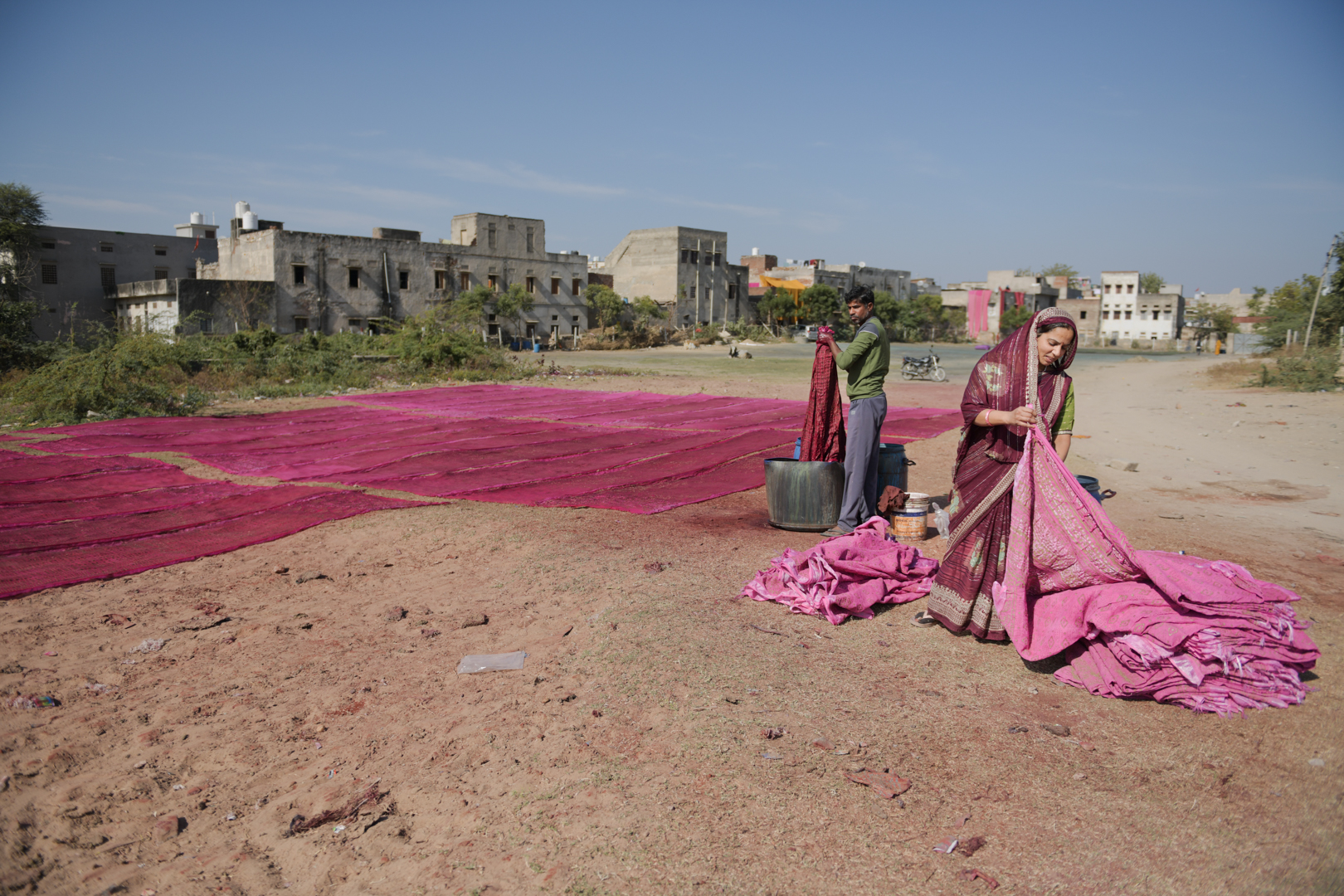
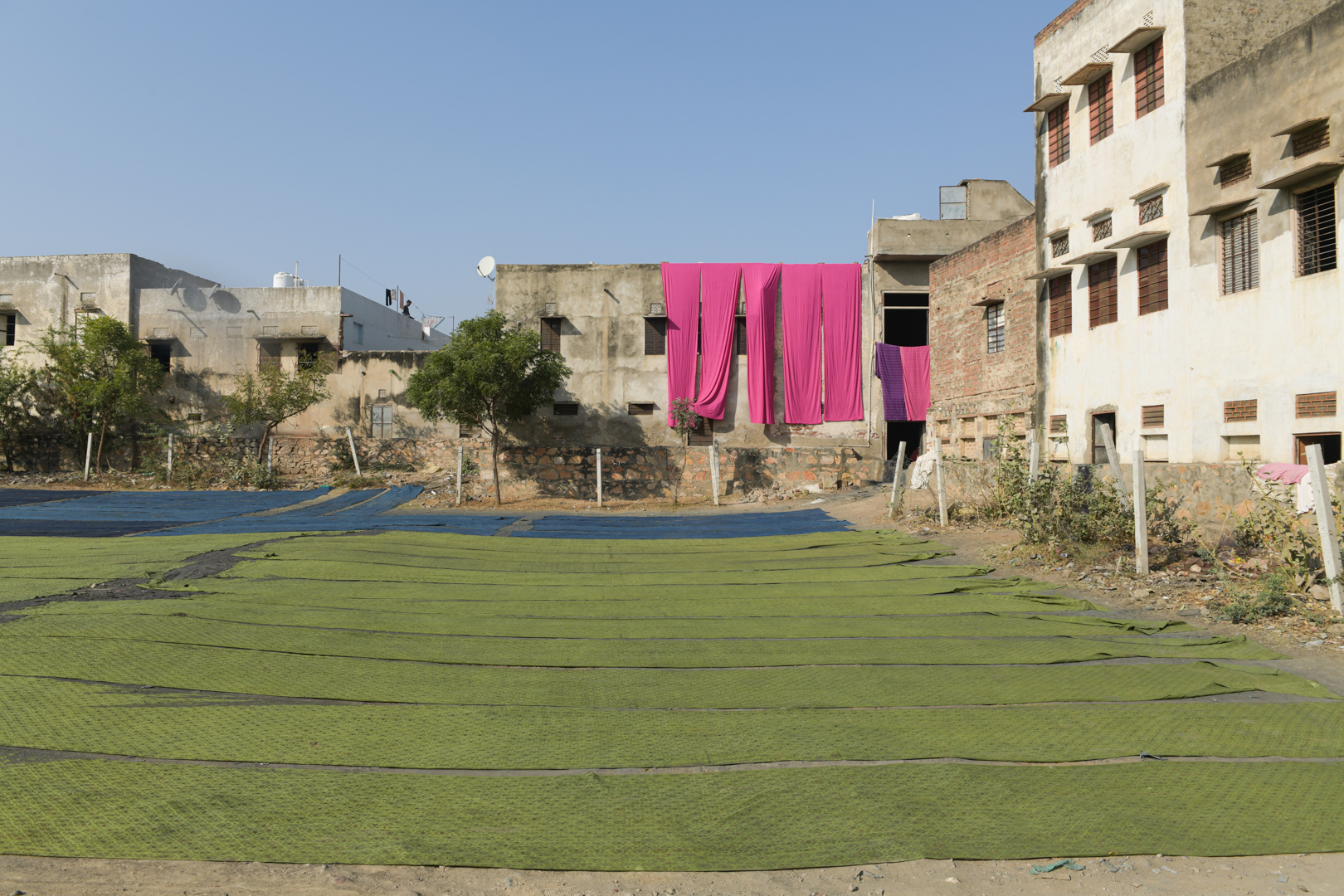
In the dusty streets of a village in Rajasthan, the narrow alleyways whisper stories of tradition and artistry. Rainbow-coloured block-printed textiles hang from balconies and rooftops, swaying in the breeze. This is Bagru, a village where the art of block printing has been thriving for centuries, and around every corner, you find scenes `reminiscent of a living cultural museum.
I accidentally discovered Bagru, 35 km southwest of Jaipur, in 2016 when I set out on my first textile print adventure in Northern India. Living in South Korea then, I was experimenting with image transfers to canvas and experimental print projects, and I wanted to learn more about screen printing.
Bagru, a local Rajasthani village untouched by time and development, invites textile lovers, designers and history buffs to experience history, eco-conscious textile traditions, and an irresistible local vibe.
History of the block printing community
Bagru’s textile traditions date back over 300 years. The village’s unique block printing methods, including Bagru and Dabu prints, have been passed down through generations by the storytelling of ancestors. The rich history of this community is tied to a vibrant history of patterns, pigments and prints.
The Chhippa community of Bagru is renowned for its traditional block printing techniques. The term “Chhippa” originates from the Hindi word “Chhapa,” which means “to print” or “to stamp.” This community of craftworkers are hand-block printing artisans known for various printing techniques on textiles, which are the foundations of their cultural heritage.
The community migrated to Bagru from other regions in the north and west of India towards the region centuries ago, bringing the art and craft of intricate block printing techniques with them. This craft became the livelihood of the small Bagru community, with the number of textile artisans in the industry fluctuating.
There are many families, estimated 200+ in the area, engaged in the block printing craft, with each family having multiple members involved in different stages of the production and textile creation process. These craftsmen and their skills make this area a renowned centre for textile artistry in Rajasthan.
In this Chhippa community, you can experience the best of textile of the block print heritage and craft traditions. This community’s knowledge and skills span generations, and various textile printing workshops and studios are scattered around.
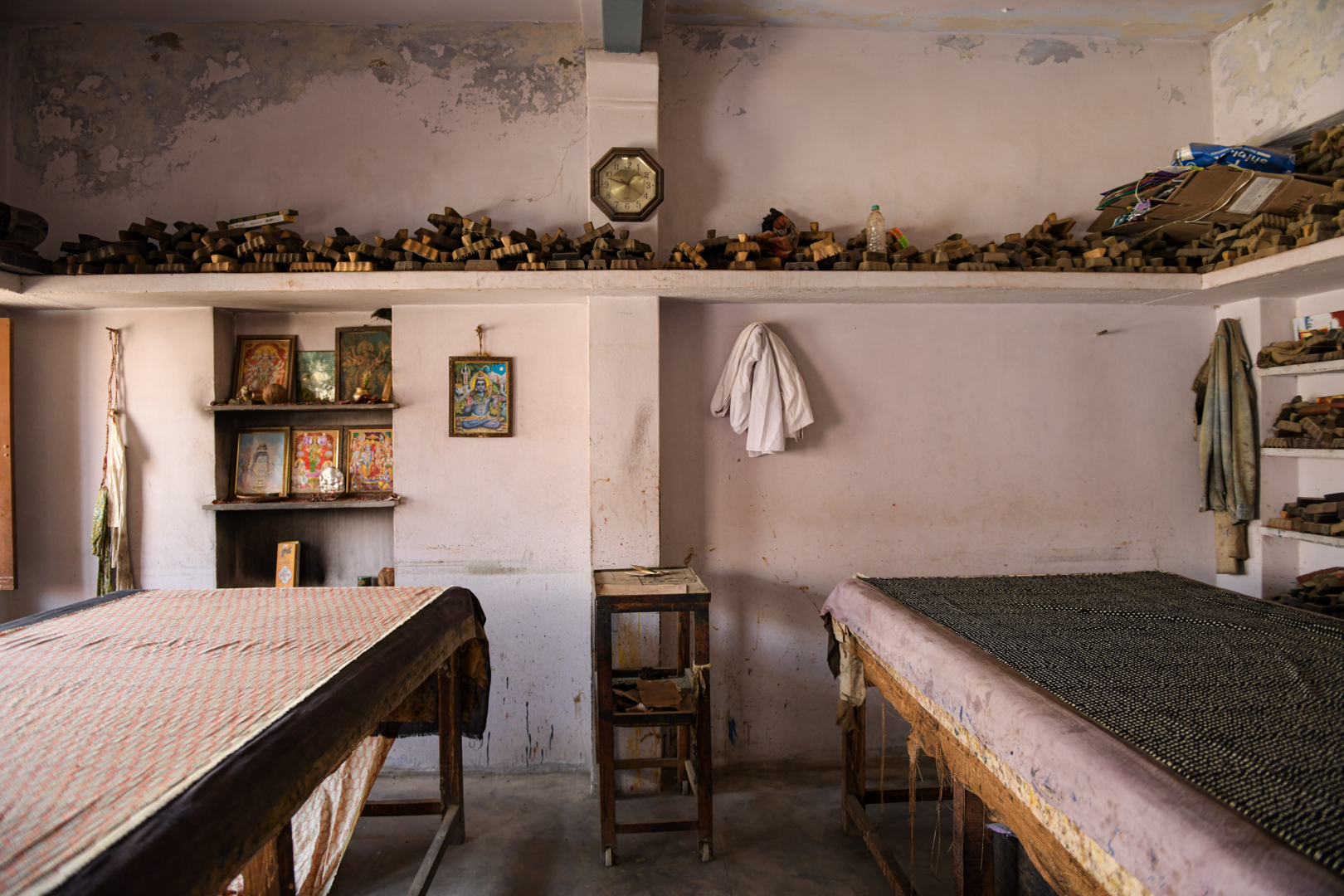
This village is all about sustainability and eco-conscious textile print traditions. What is most astounding is how history and religion intertwine; the presence of the gods worshipped by the community and spirits of an age-old craft, the block printing gods, are visible in every little textile print room.
Bagru: A Journey Through Time
Imagine picking pages from a coffee-stained history book and dropping every page into a modern world. That is Bagru.
The village vibe is chilled and traditional, and the streets are filled with villagers wearing beautiful block printed and other textile creations. From the Bagru printed textiles, Dabu designs and all familiar red Rajasthani shibori headscarves. I found the dress sense of the villagers fascinating, the men in their white kurtas with these incredible headscarves and gamchas. Woman on motorcycles, sitting at the back of the bike, legs swung to one side, comfortable in their beautiful sarees, crisscrossing through the traffic. Sometimes, the glitter of the golden printed detail glimmers in the sun. I am always awestruck by what I see in every overcrowded traffic jam.
Bagru is a visual experience like no other. With its rustic charm, block printing and mud printing studios and centuries-old textile traditions, this village is a very good example of the spirit of Rajasthan.
The more time you spend in the dusty streets of this village, the more you learn about what to look at and what you see around you. Every corner is an inspiration. The architecture, the little shops, the vibe, the chai, and, oh, let’s not forget, the textiles.
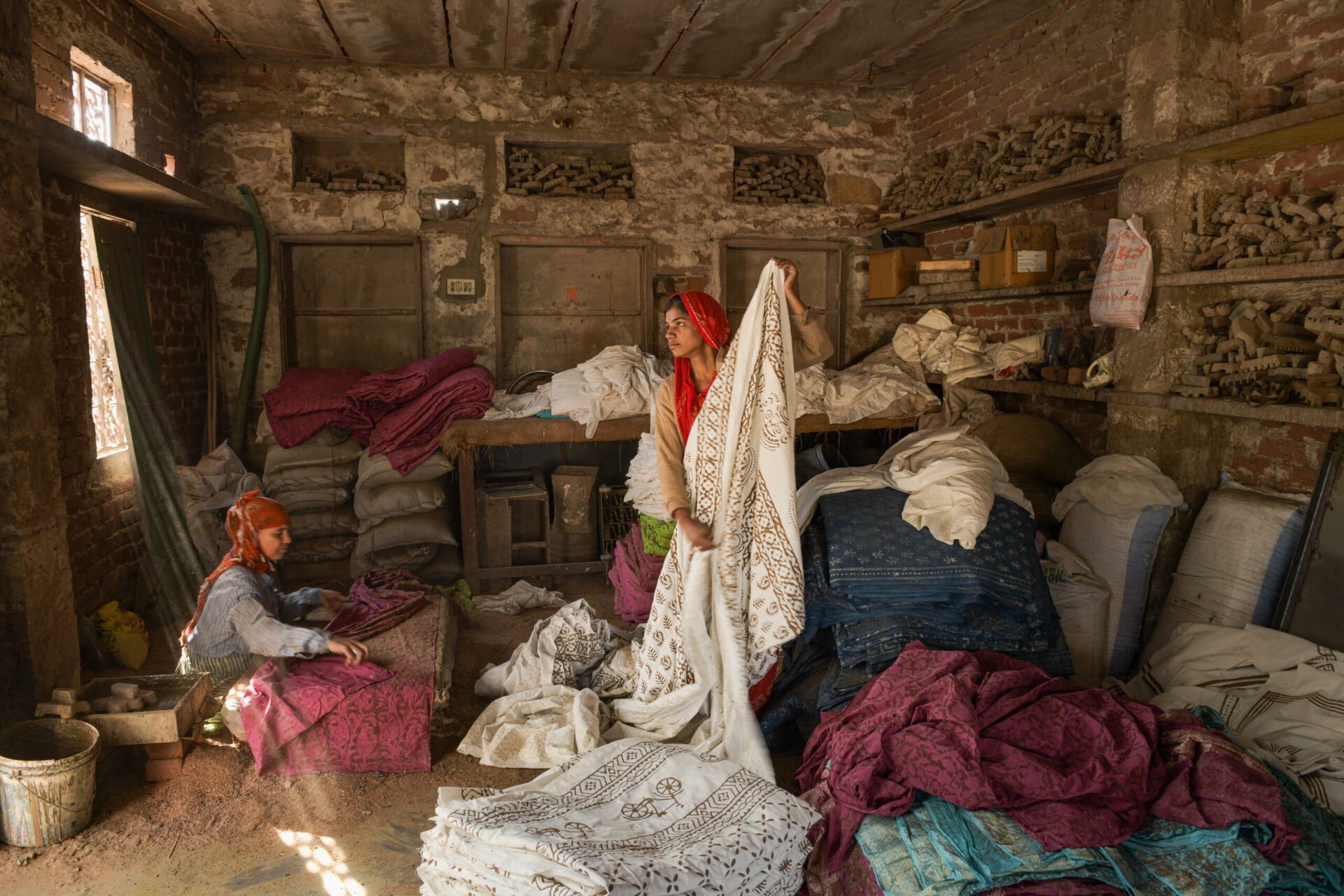
Bagru is my favourite village in India, and the more time I spend in Rajasthan on my visits, the deeper these community footprints settle in my heart.
Time does feel like it has stopped in this village. The only visual signs and symbols that give away that we are, in fact, still with our feet in the “real” world, would be dusty cars and Honda motorbikes with two or more people (or even a family) winding through the streets. You also see designer jeans and bleach-clean Nikes here and there.
Also, a dead giveaway is the electric scooters that zoom past with very little sign of pollution and noise. Cows roam the narrow lanes between the concrete buildings; they are worshipped and honourable members of these communities. Some are dangerous, and I had to walk in circles around these giant beasts with their sharp horns a couple of times for my safety, as I was told to do by everyone I worked with at the printing studios.
The areas I explored around Jaipur and Bagru were somewhat rural and undeveloped, and you could feel what everyday life is like spending time with the locals. Bagru is also notoriously difficult to get to; I had to fork out thousands of Rupees for my taxi transport to and from Jaipur. The local bus journeys are long, and the buses from Jaipur are packed. The local Jeep desert taxis are also very overcrowded and will probably take time and effort to navigate, especially if you don’t speak Hindi.
That said, it is worth every Euro to be transported back in time; you can lose yourself in your imagination and artistic expression, which is a way of life in this Rajasthani village. Even if I tried, I cannot describe my love for this dusty old Rajasthani village in words. The local food is so spicy that my stomach burns, but I know I can eat plates of chappatis; they are delicious, and the chai is good. Local in Bagru is lekker!
Textile printing is not just an art in Bagru but an important economic activity. The craft provides livelihood to hundreds of families working in the village’s textile industry. Tourism driven by these block printing crafts brings much-needed revenue to the community. Tourists visiting support local businesses, craft studios, workshops, and artisans. The economic impact of these heritage crafts extends beyond the village walls and contributes to the broader regional economy.
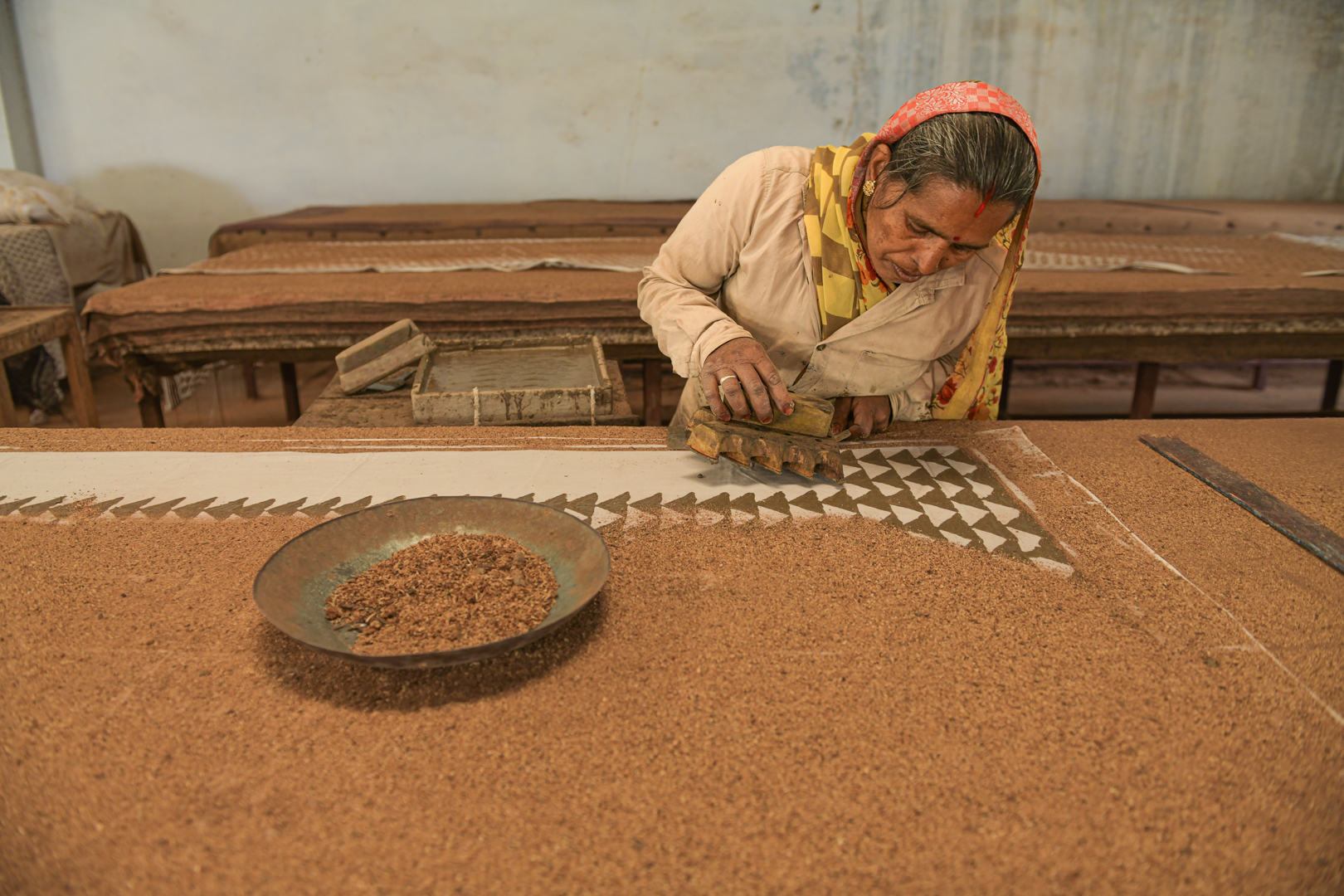
Learning block printing from the Masters
My journey into Bagru’s textile traditions began at a Jai Texart Printing Workshop in 2016. I spent a few days working with a master artisan, Laal Chand. I learned about Bagru and Dabu printing traditions from the very knowledgeable Hermant Sethia, the owner of Jai Texart. My interactions and textile experiments with Mr Chand and his creative mastery of mud and mud printing designs got me hooked on mud printing. I am Mr Chand’s biggest fan. I call him Mr Red Moon; he is the inspiration for an ongoing iteration of the first mud print design I made with him. The second one is currently in print in Bagru.
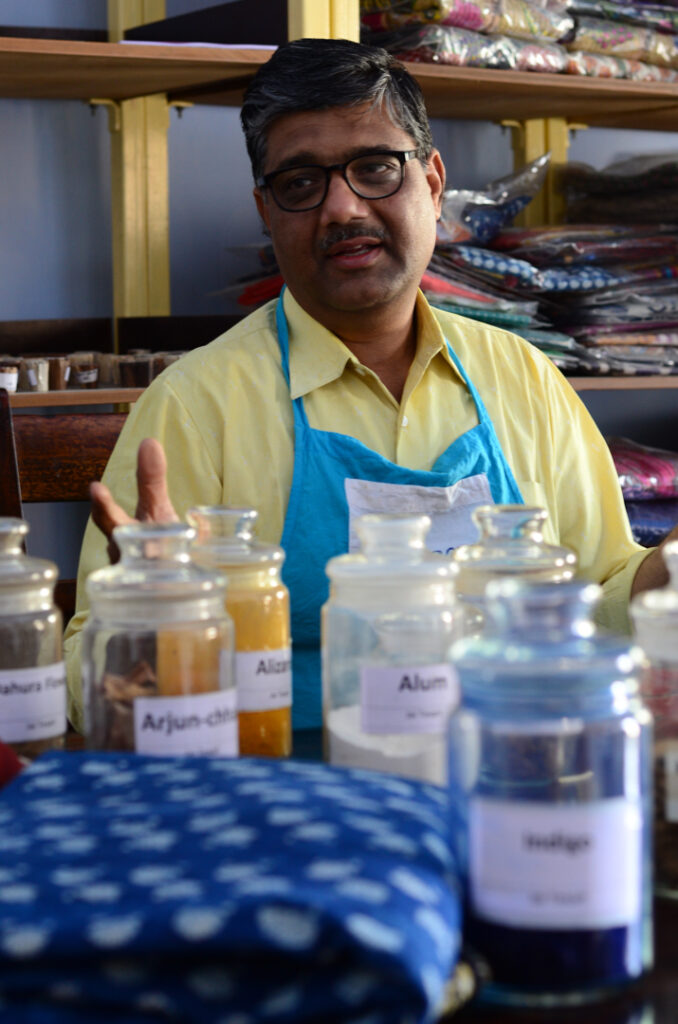
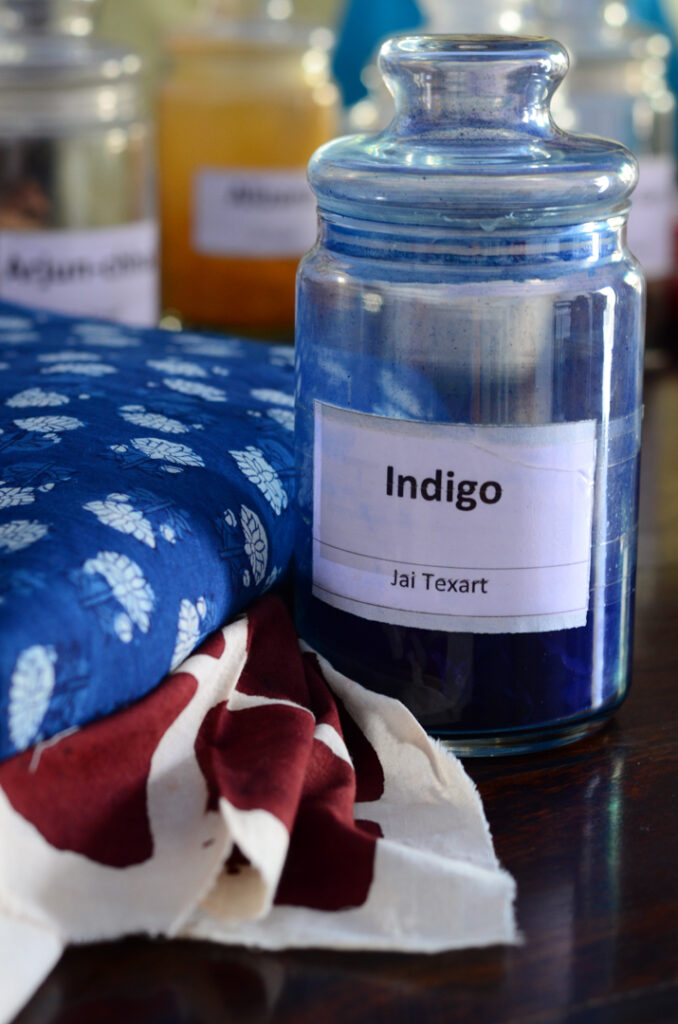
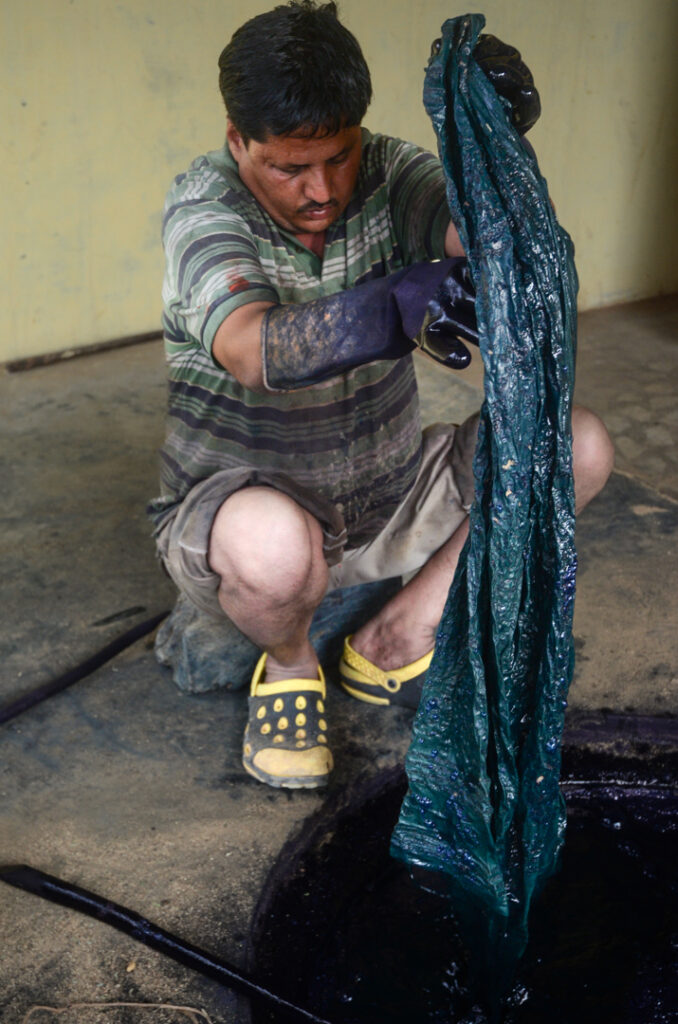
Mr Laal Chand, my first Dabu print teacher at the Indigo Vat at Jai Textart. Photo Lizane Louw (Bagru, 2016)
Since then, I have taken more workshops guided and taught by Mr Chand again in 2024; when I am in Bagru, I always stop at the workshop to see him. We communicate in broken Hindi and English; he is always keen to help and guide.
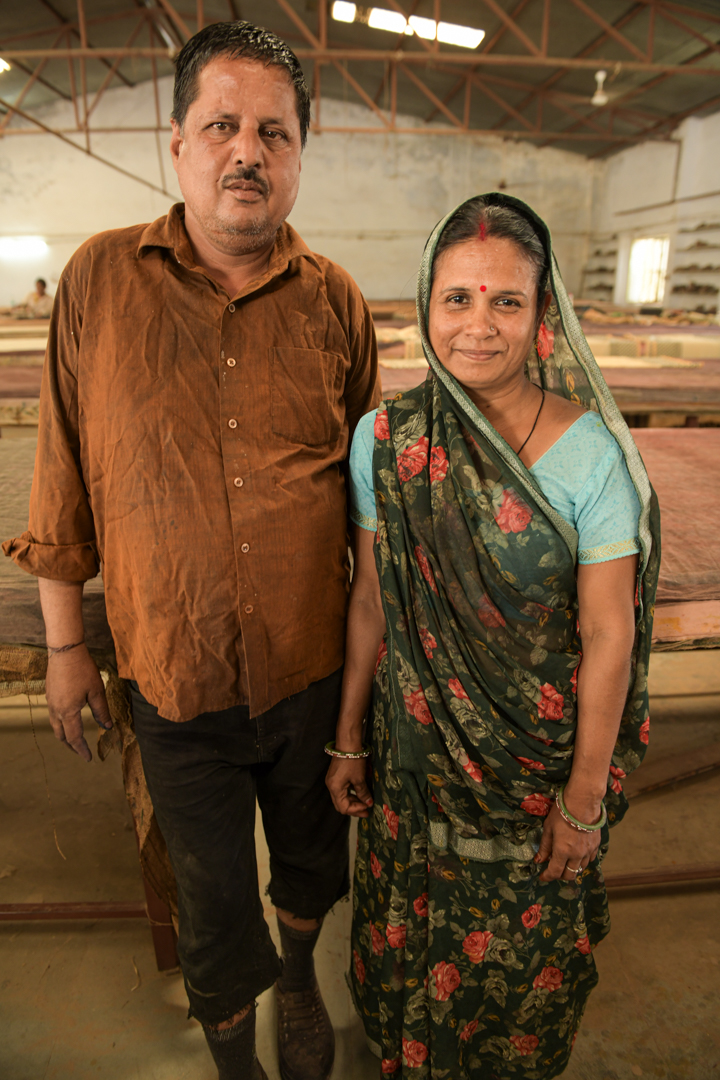
A highlight of my time in Bagru in March 2024 was the time I spent with the Medadwal family of printers and dyers. The Mud and Water Workshops are one of a kind; I spent four days with Mr Medatwal, Akash and Avinash.
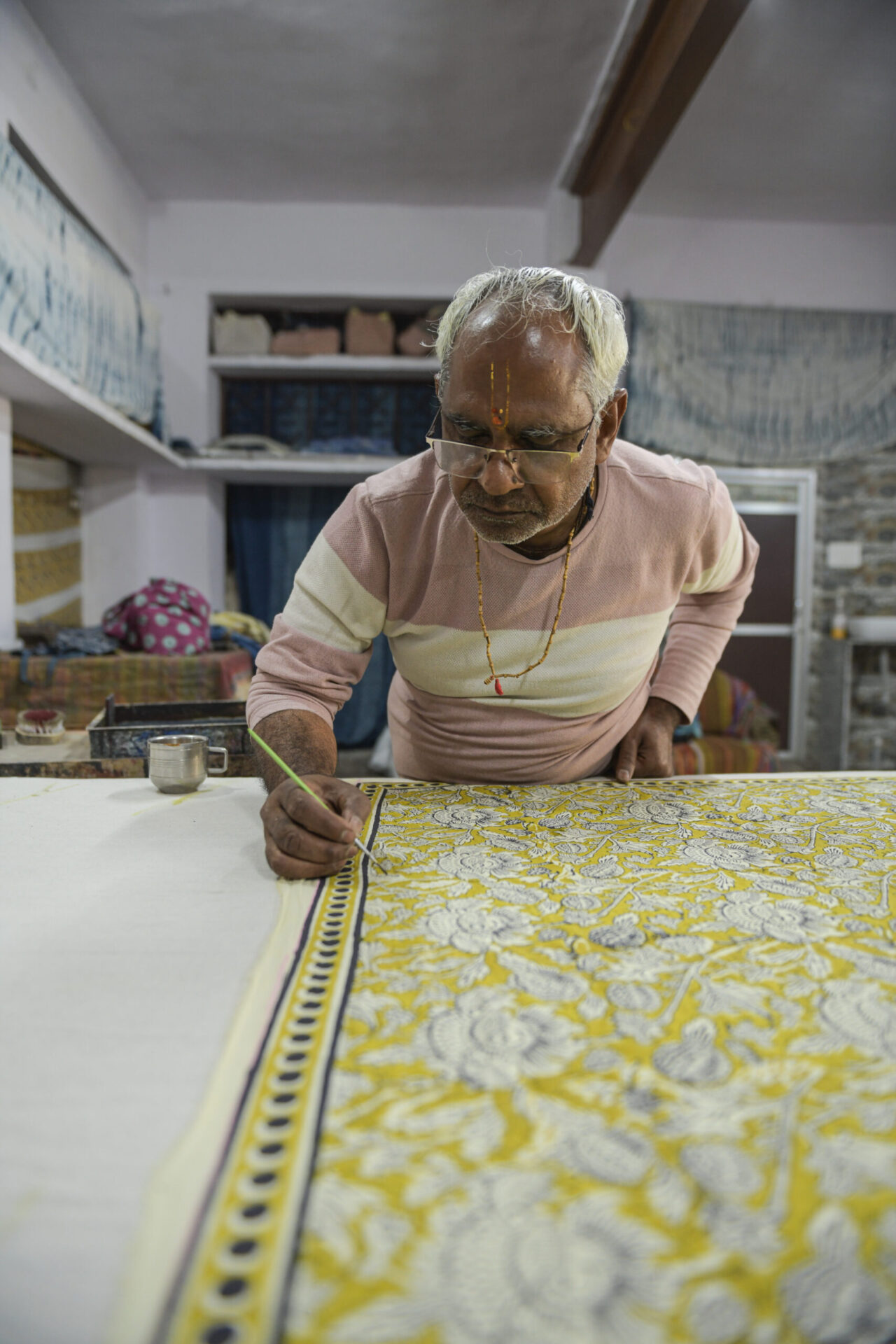
It was a life-changing experience, and what I learned from these master printers opened my eyes and made me appreciate the craft even more. I discovered the “Lila Technique.” Avinash told me that I was the first person he knew who was painting with mud.
Motorbike rides on the back of Avinash’s electric scooter, exploring the streets and diving underneath dusty print tables and old cloths to look for interesting blocks are some of the fondest memories of this experience. Avinash goes above and beyond when he teaches you, and I got to see corners of Bagru that very few people do.

Drinking chai with and watching Mr Medatwal, Avinash’s dad, work on my textiles and correcting some print mistakes I made was encouraging. His love and extensive knowledge of the craft, his sharing his practice, and watching him work was the best educational experience I could have ever asked for. This was what I was looking for; it was a very encouraging and inspirational experience to see award-winning Chhippa masters in action. The skill and artistry of this family are next level.
Each of these experiences, with all these craftspeople, was very special and inspired a new creative direction for my work and career.
The textile printing of this region is world-famous, and I can understand why. What draws me most is the secret of the inks and mud pastes they use in the studios. What I love is that these traditions are challenging to replicate. You can only find mud for Dabu on the river banks that flow in the region. Each studio has secret recipes for inks, dyes and mud paste for the mud cloths.
If you want to know more, head to Bagru and find a master printer to spend time with. Even better, stay for some workshops, spicy food and some chai!
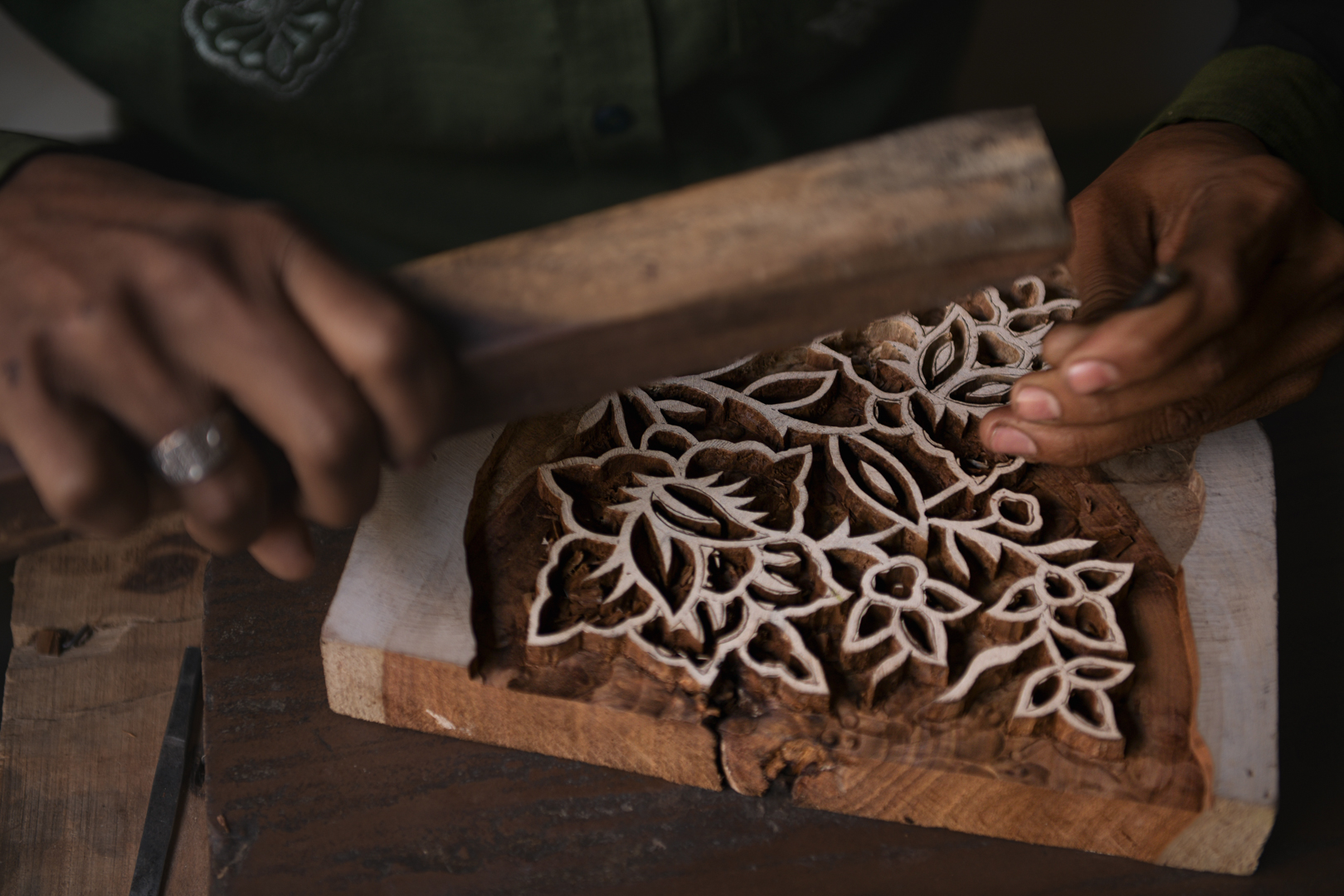
The Artistry of Wooden Blocks
Artisans carve intricated designs and patterns into wooden blocks to achieve these masterpieces of textile craft this region is known for. Each block is a work of art. I spend hours with master block makers, observing the detailed work that comes to life as they carve intricate floral and geometric patterns and designs that are the symbols of this community.
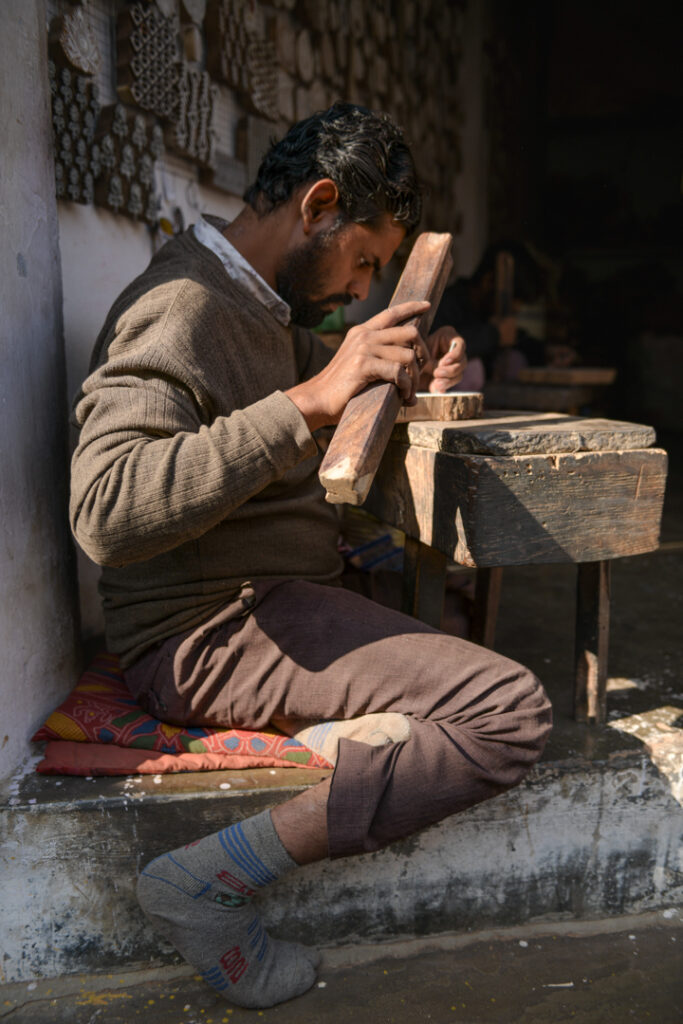
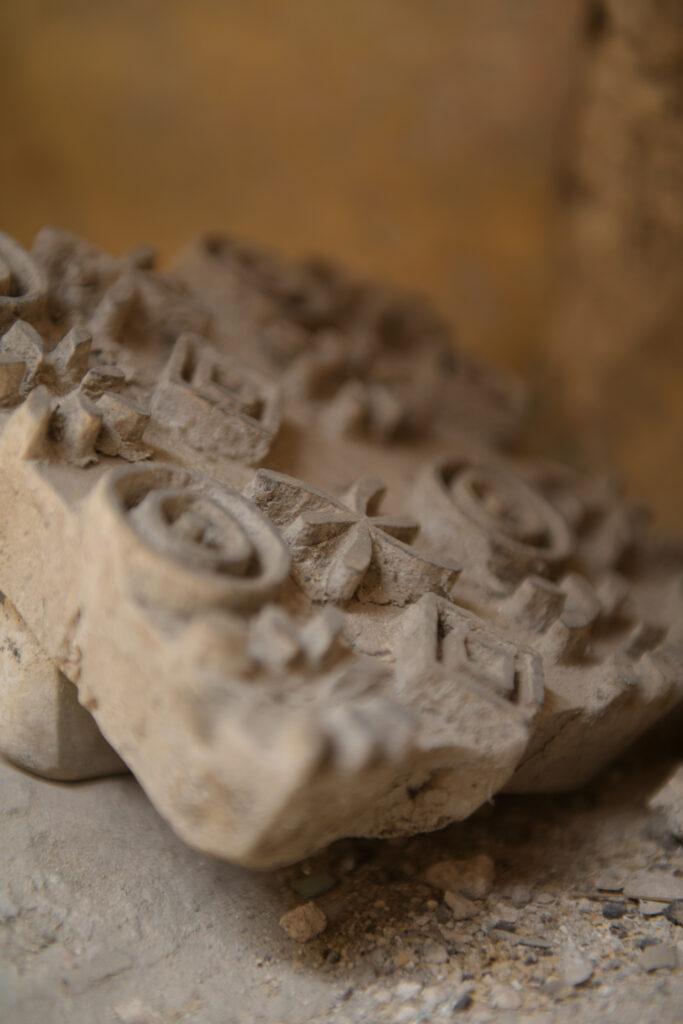
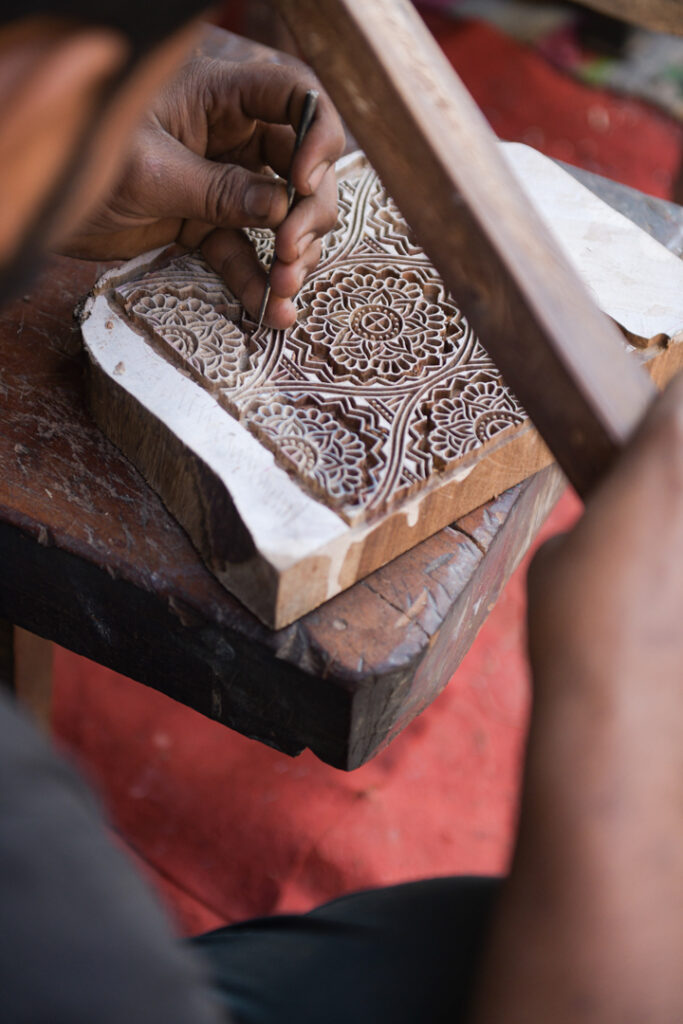
I was amazed by the work of Mr Naseem Khan and his team of block carvers. I visited his shop several times while printing in Bagru.
The walls of Mr Khans’ shop are lined from top to bottom with carved wood block treasures. Each block narrates the stories of Bagru’s rich history. With every visit, I learn more about the design of blocks, and I can see and appreciate the modern, more Western design influence. I can spend days hanging out in these tiny block shops; it is incredible what the human hand can create with such primitive carving tools and a piece of wood.
History is lived daily in this desert village and not confined to text or history books. History is etched into Bagru’s identity. History in this print village and living textile museum is alive all around you each day.
What I find most inspirational is that most craftsmen are taught by their parents, and the stories and practises are from their ancestors. This is the magic of this craft; this craft can’t be studied in flashy universities and expensive colleges; you need to go to Bagru and get your hands dirty with ink and mud and stain your fingers with the tradition of the locals.
The textiles produced in Bagru hold great cultural significance in Rajasthan. They are not just fabrics and printed cloths but symbols of heritage and tradition. In most communities in the area, they are also symbols of status and identity. These prints are still used as traditional attire for weddings and other significant cultural events in the community. The patterns and colours carry meanings and stories passed down through generations. Wearing Bagru prints allows the local Rajasthanis to connect with their roots and celebrate history.
Colours created by Nature and used in block printing
Bagru’s Chhippas have developed some of the most unique and eco-friendly textile print traditions — their world and textile crafts are printed and coloured in natural, eco-friendly colours.
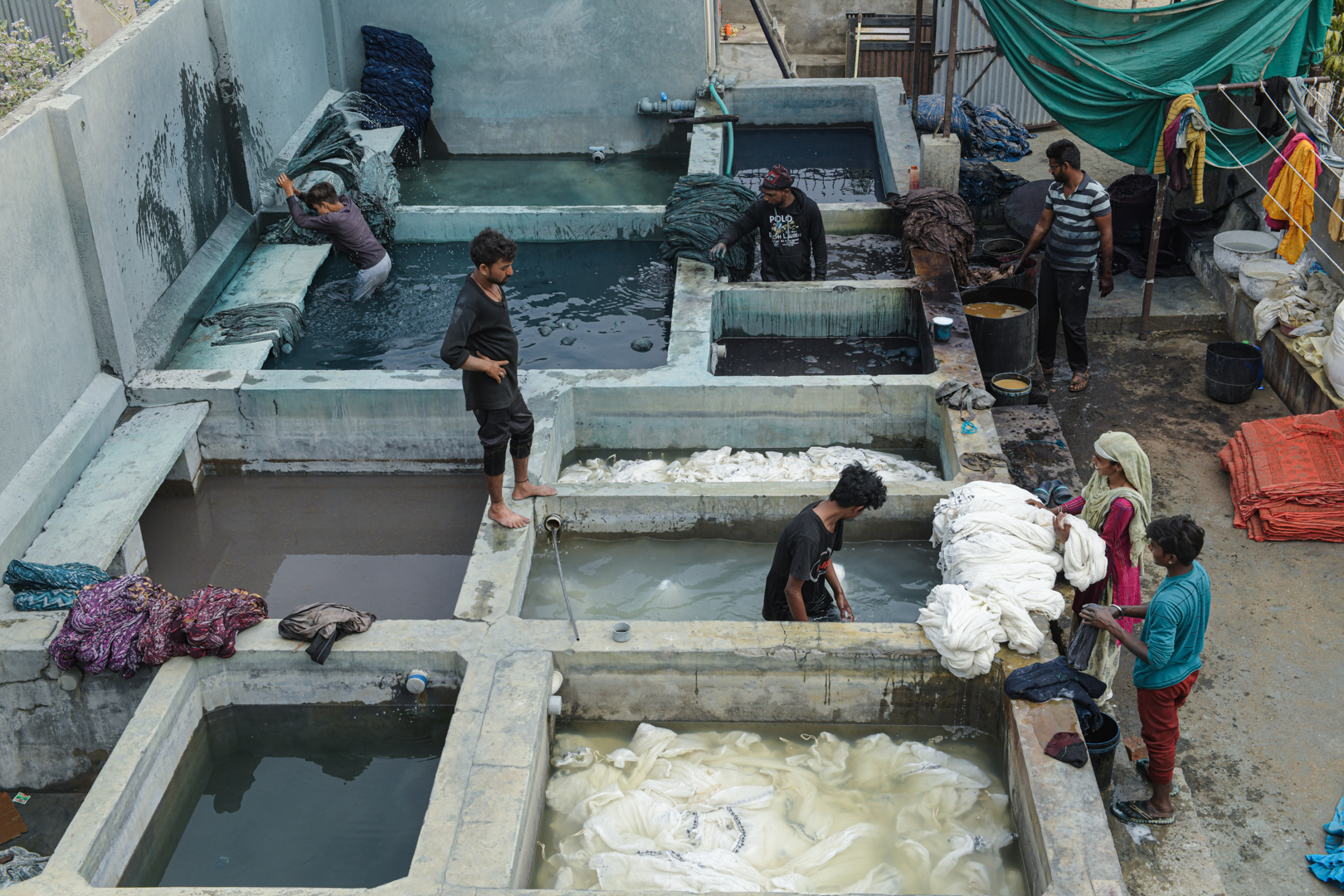
The more time you spend in the community and learn about the craft, the more you will start to recognise the colour palettes of Bagru printing madder, harda, turmeric, horseshoe iron, kashish and indigo. I am always amazed by the brews I learn about in the natural dye process. The dyes and liquids that set the textiles are like big pots of tea made from mixtures of flowers and seeds, brewed and steeped on open-air fires in some studios’ back streets and corners.
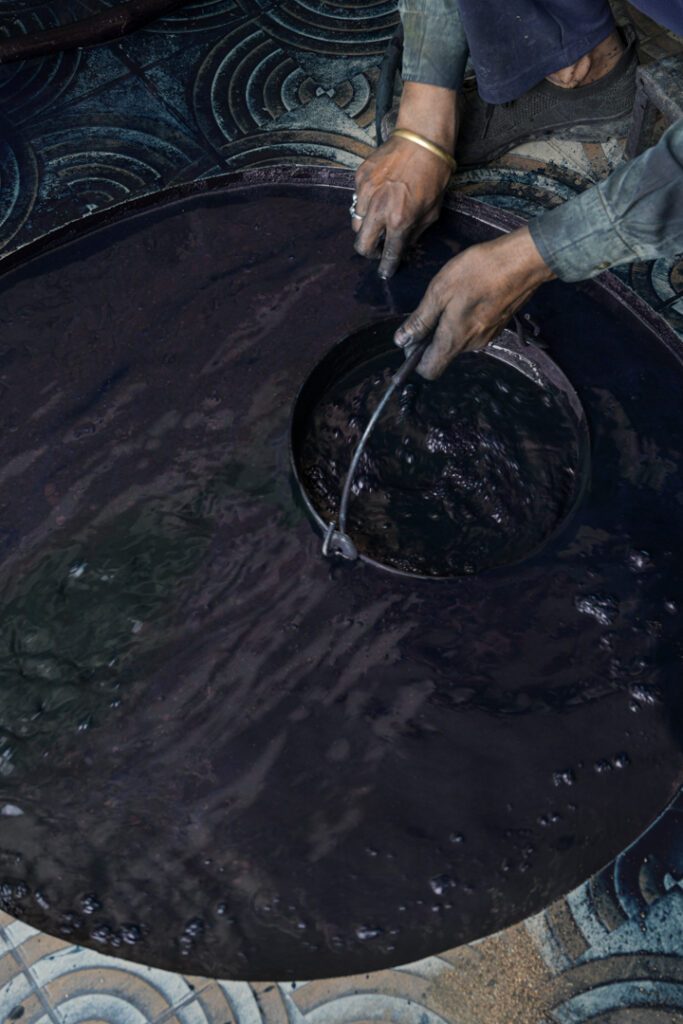
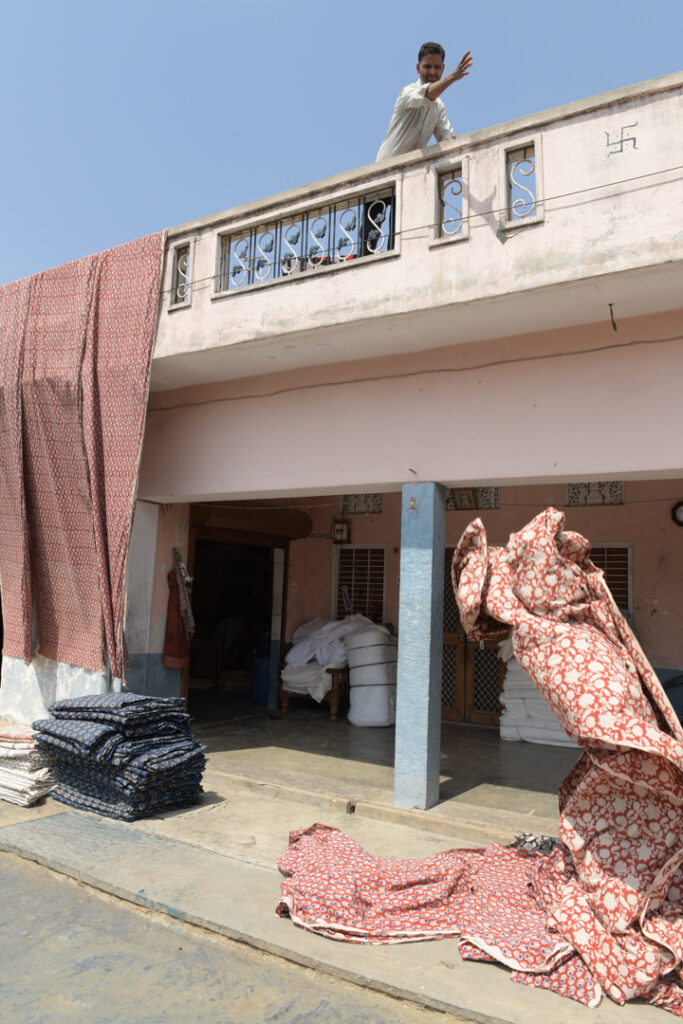

I am drawn to this “alchemy” of organic inks, natural dyes and mud. Most of the pigments used are colours from Nature. Inks and dyes made of plants and minerals. Most of the processes followed by the block printing communities are simple but so profound. The inks are also long-lasting and durable. I still drape myself in the scarves I created eight years ago; they look like the day I printed them. In short, they are stunning. I still can’t believe that I made these textile pieces myself. My collection grows as my research and print experiments continue.
What I like most is that the experimentation with colours, pigments and prints continues today. More experiments are being done with tea, herbs, spices, gum, and other minerals. I was told that these experiments take time and are sometimes a hit or a miss. I was shown some samples of textiles that Avinash is experimenting with, all-natural dyes.
The organic dye palettes I saw and experimented with are any artist’s dream. Even though the natural palette of Bagru printing is based on only a few colours, the combinations of the colours and the dyes give variety. I can drape my whole house in indigo and prints made from kashish.
These colours I love so much result from years of experimentation, trial and error and research done by the artisans. This timeless textile art tradition and its use of natural resources in the environment and natural world is truly inspiring.
Mud Printing: Block printing, earth and art
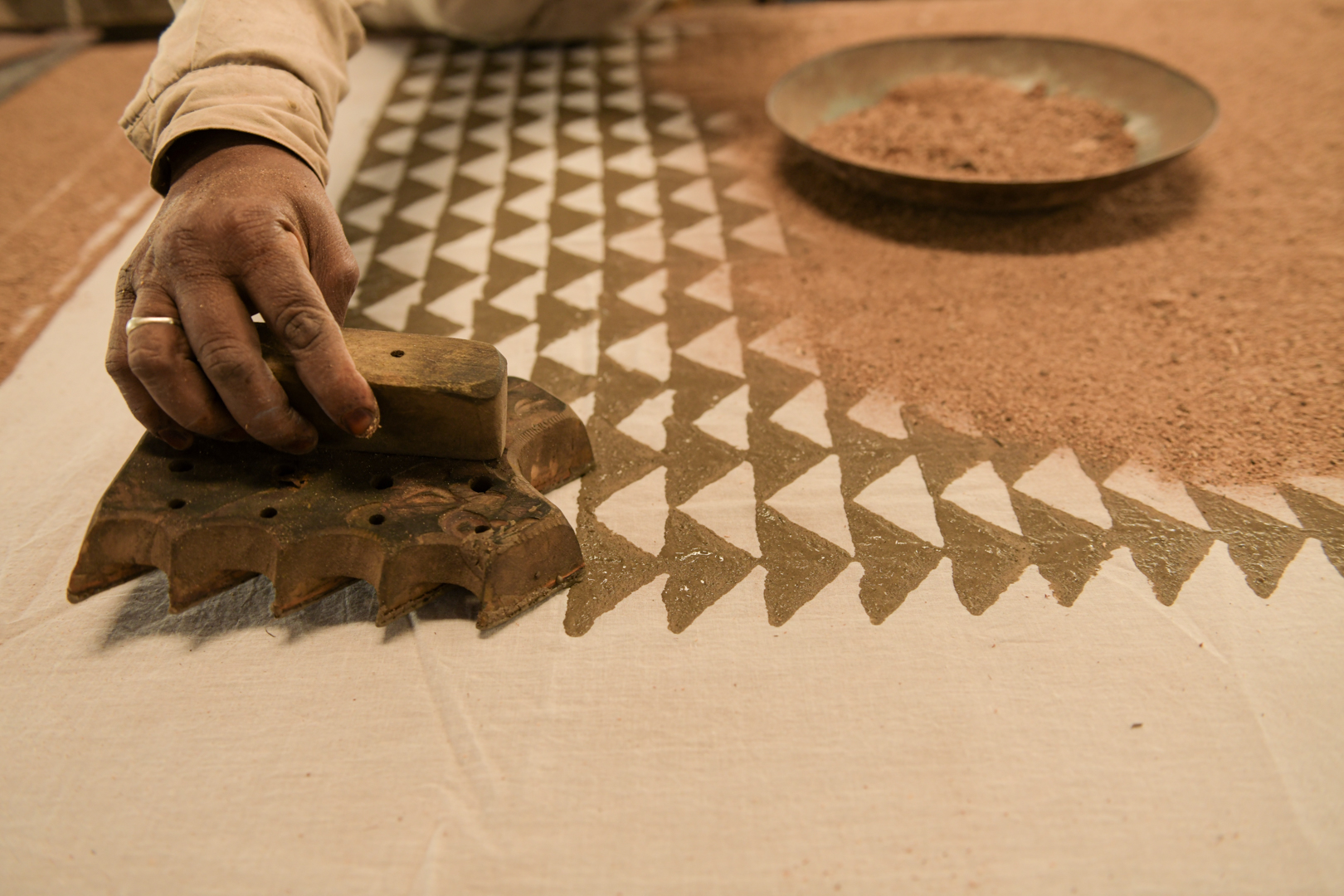
The most exciting print technique I ever encountered in my research into printing and textile experiments was Dabu mud printing. This block printing tradition, where artisans create mud cloth, is an art form as old as time itself. I know of some variations of this print tradition in Africa, Europe and Japan. In Nothern Germany and Austria, blueprinting, a resist print method, is a well-known and respected craft.
The Dabu process of Bagru is very earthy. Local river mud is used as a resist paste to print designs on cloths, and the fabric is then dyed with natural dyes to create intricate patterns and designs. I was honoured to work with many skilled artisans from this community, experimenting and learning about Dabu printing. The skills of masters that I observed and worked with led me through this fascinating journey of creating mud cloths. I learned some tricks from a few printers and was told how to make the mud paste and how to experiment.
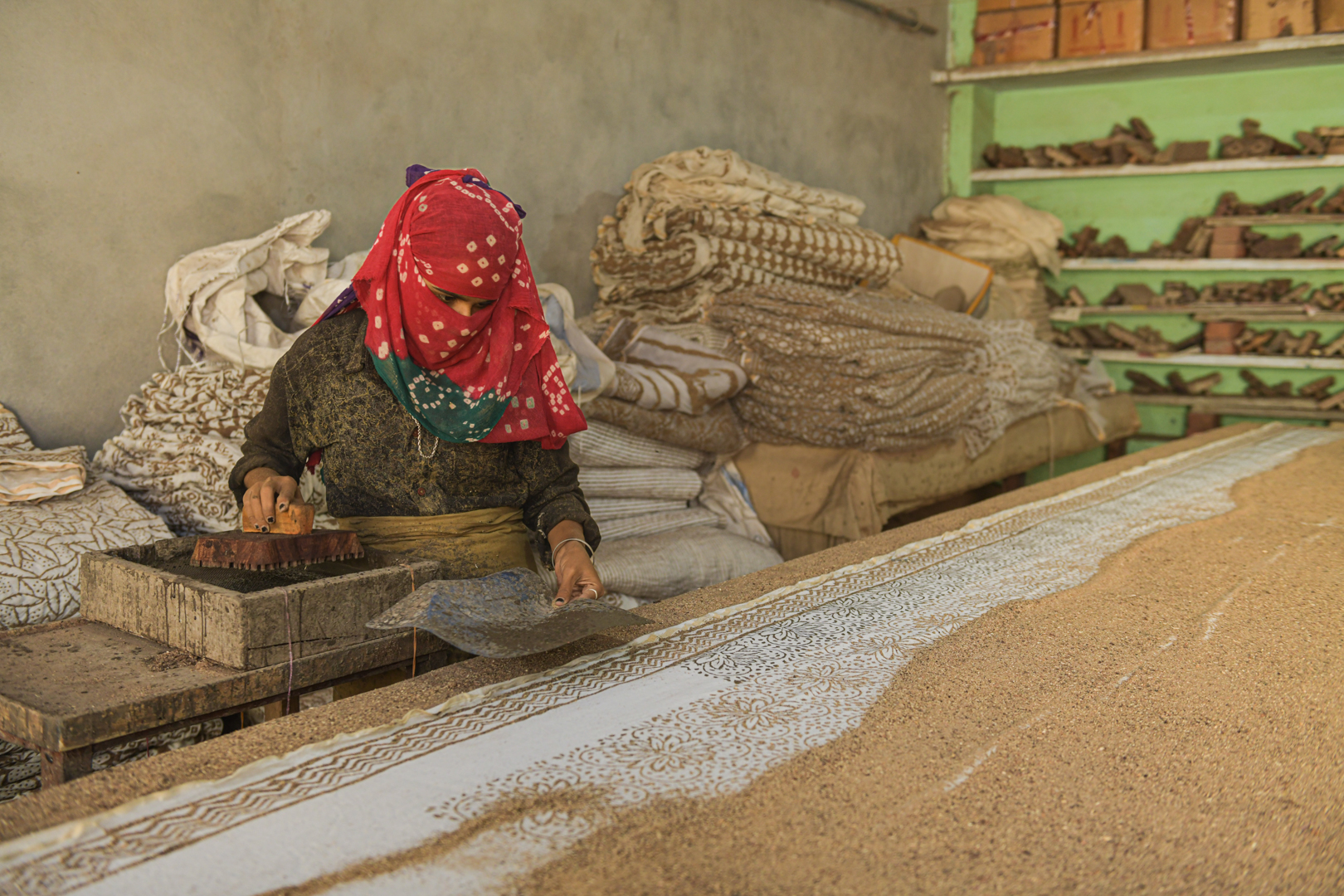
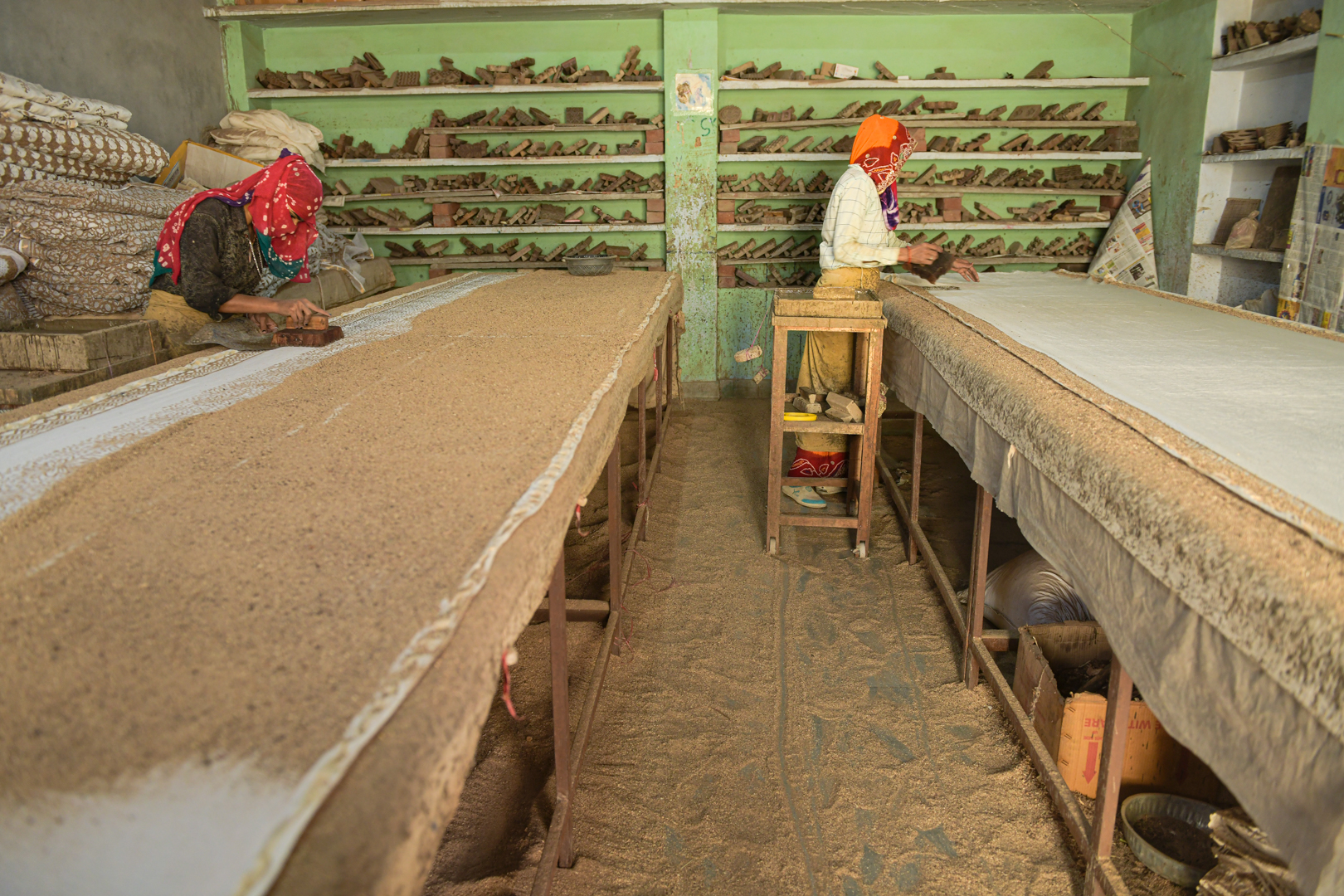
But for me, Dabu can only be done in Bagru and the surrounding villages. The secret ingredients are mud from the river banks, the indigo and kashish from the region, and the hot Rajasthani sun that bakes the mud on the cloth, which dries very quickly.
The mud paste dries and, as a resistance, preserves the hidden designs beneath; Bagru’s earth-inspired artistry is nothing short of magic. I am hooked.
The Long Dark Shadow of Mass Production and Machines
Yet, amidst the charm of Bagru, lies threats, dark and unknown shadows—the development of the textile industry and the art form’s uncertain future. Ageing artisans today struggle to pass down their wisdom and experience to a generation drawn to the allure of urban life, the big developing cities and high-paying international jobs.
Youngsters in the communities are encouraged to become software engineers or fashion designers. Who would want to work in these warm conditions in the desert with their hands?
Guardians of the block print tradition
Amidst the challenges the community and the block printing crafts face, there is hope. A few organisations and individuals are working to safeguard Bagru’s block printing tradition. I also hope that sharing my personal experience and the work I created will inspire more people to think about these incredible artistic heritage crafts and the benefits of slow fashion.
Most importantly, I want to encourage everyone to start thinking about the dyes and inks used on their clothes; it is also important to consider where your clothes come from and the communities creating them.
My experiences in Bagru deepened my understanding of block print heritage craft’s fragile yet resilient nature. The Chhippas, their history, the organic inks, natural dyes, and mud printing are genuine treasures deserving recognition and protection.
Bagru, with its timeless magic, is an invitation to explore, appreciate, and be inspired not only by village life in Rajasthan but by the resilience of a community that loves its craft. This village also reminds us that sustainable cultural practices are everywhere, just like Bagru. We should head out, explore and experience the remarkable stories of artisans and then share our experiences with others. In this way, we become advocates for protecting these heritage crafts.
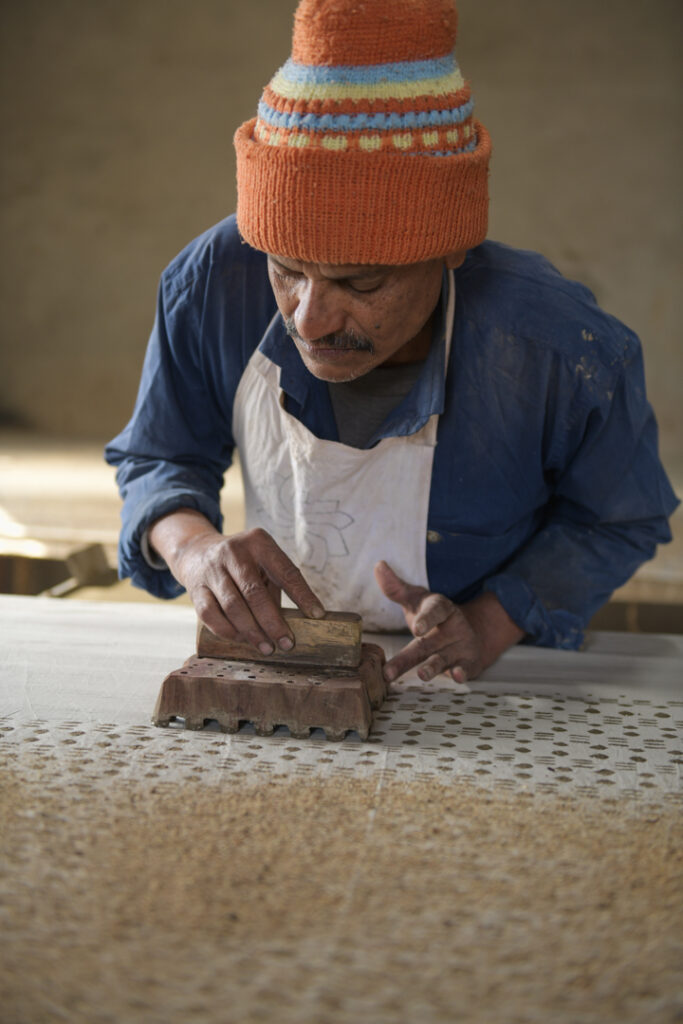
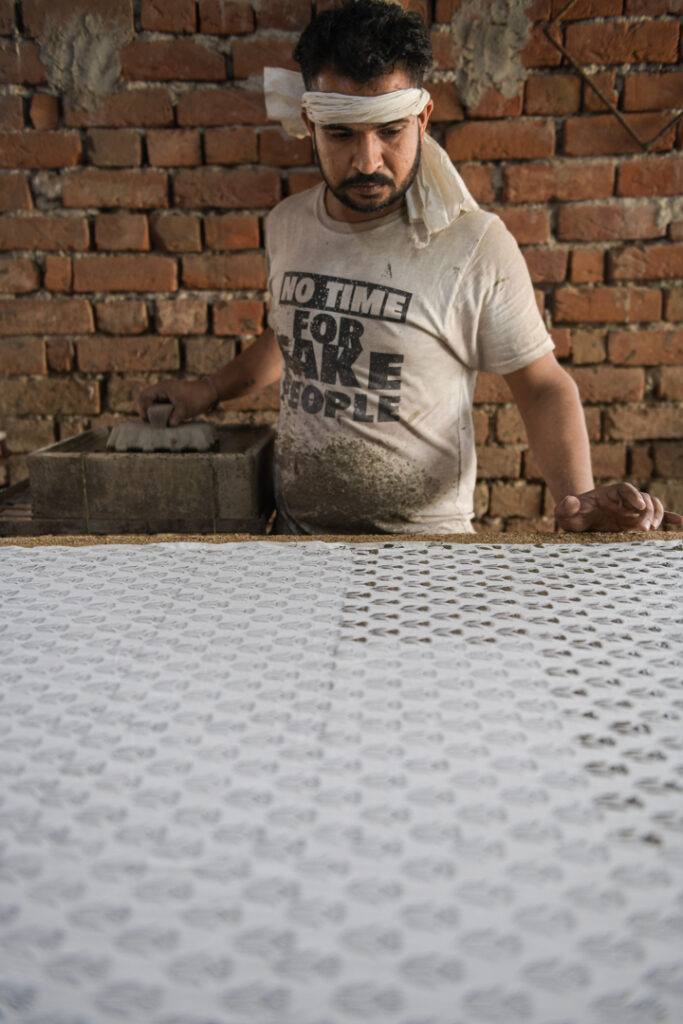

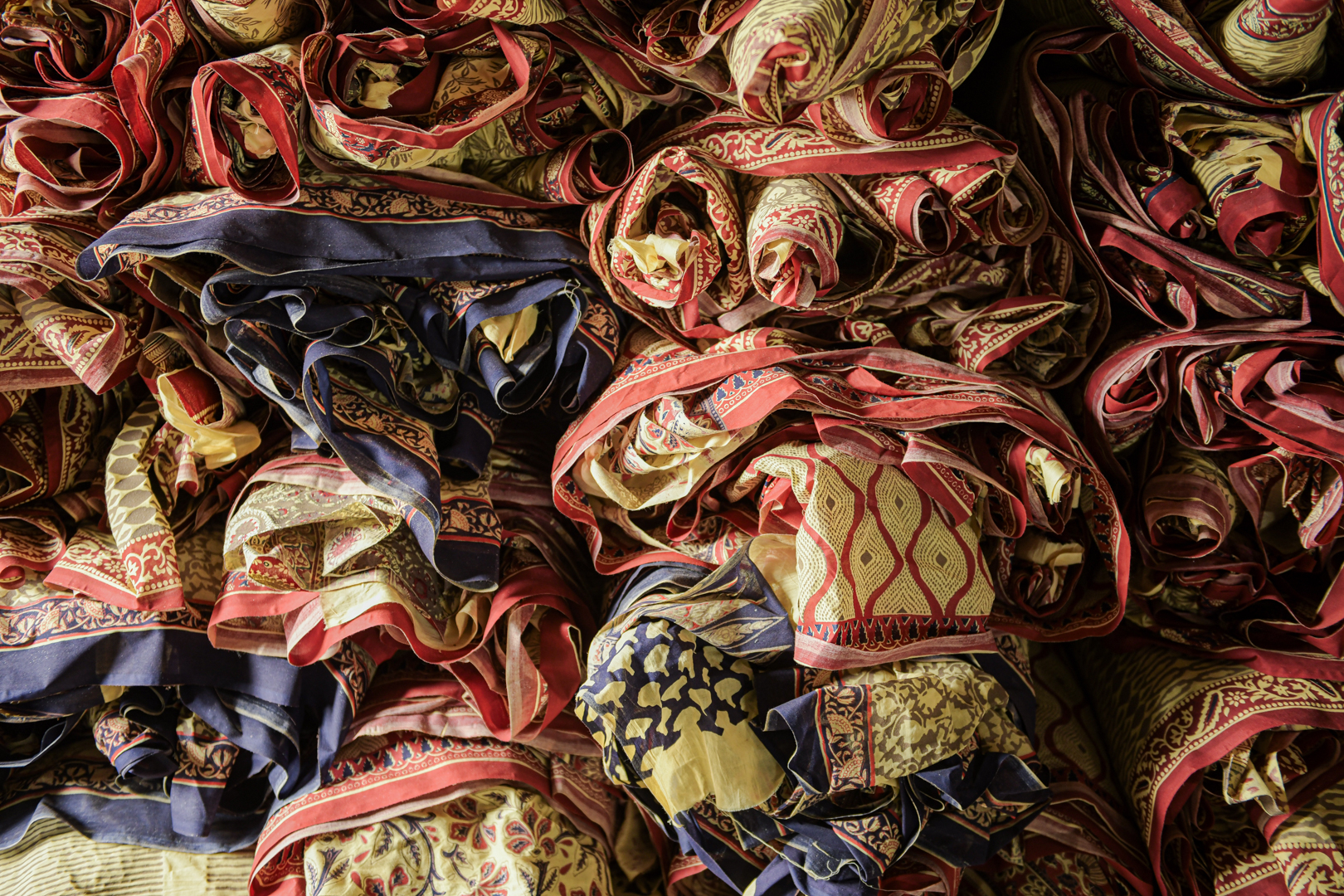
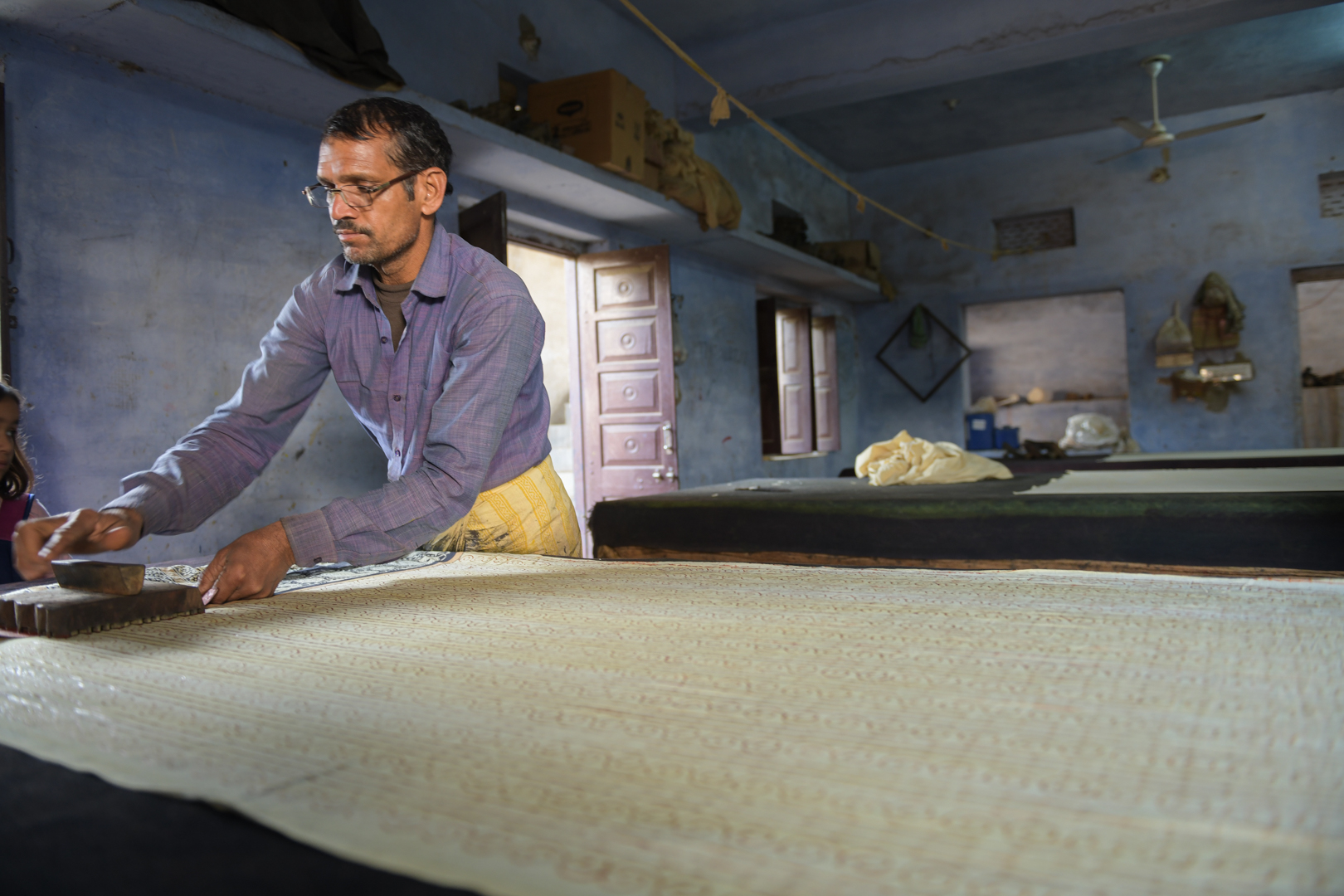
Artisans showcase their expertise in traditional Bagru and Dabu block printing in India; designs are meticulously applied with mud and inks onto fabric. Each artisan demonstrates a unique phase in each printing process, from aligning patterns to ensuring precision in every print. Their dedication and skill preserve this ancient art form, creating beautiful textiles celebrating India’s rich cultural heritage. Photo Lizane Louw
I want to express my gratitude and deep respect to all the artisans, block carvers, and block printers who contributed to my learning and this journey. I extend an even warmer appreciation to you, dear reader.
With your curiosity and interest in reading this story about my personal experience, I hope I made the magic of Bagru’s block printing tradition come alive for you. May you one day carry the spirit of Bagru with you by investing in a Bagru or Dabu print and following through on this invitation to explore, preserve, and be inspired. If you love textiles and printing, you know where to go.
Bagru taught me so much; one thing I learned from my explorations of the villages in the Thar desert is that there are some cool places to visit, especially off the map and off the regular tourist cycle. Visiting these places can and will be life-changing.
Most of these places might be very hard to get to and navigate when you are there, but these experiences are worth it. There are places like Bagru waiting to be discovered, stories waiting to be told, and sustainable traditions waiting to be celebrated. May your travels, like mine, lead you to places that fuel your curiosity and inspire you to think and live more sustainably.
I look forward to my next visit to the dusty streets of this printer village in the heart of Rajasthan.
Aditional resources: Updated June 16 2026.
About my block print experiences in Bagru
My relationship with Bagru spans over a decade. I first studied with Jai Texart for four days in 2016, where I was introduced to the crafts of Bagru and Dabu block printing. It was there that I met Mr. Laal Chand, also known as Laalji, who single-handedly influenced a profound love for and a new direction in my research and artistic practice. Laalji introduced me to Dabu printing and, for his teachings in broken English and Hindi, I will forever be grateful.
I returned to Jaipur in December 2023 for a month and again in March 2024 for for a month. During these visits, I continued my fieldwork and research to deepen my understanding of the craft. I spent more time researching and printing with Jai Texart, Studio Bagru and, in 2024, was introduced to the Medatwal family of printers.
Over the years, I have had the privilege of learning from several artisan families and master printers, each contributing to my understanding of colour, cloth, and heritage textile practices. I also completed a four-day workshop with Anup Chhippa when he was still one of the directors at Studio Bagru in March 2024.
At the end of 2025, I also spent a month in Gujarat, where I continued my research and worked alongside artisans to further explore block printing, colour systems, and textile traditions. My work is informed by in long-term fieldwork, repeat visits, and ongoing relationships with artisan communities. I continue to document these experiences and am currently writing stories and field notes that explore the people, places, and processes that have shaped my practice.
The recommendations below are based entirely on my personal experiences working alongside artisans in Bagru and Jaipur and are shared to acknowledge and support the people and places that have generously contributed to my own learning journey. I look forward to heading back to Bagru in 2026.
Recommended block printing experiences
A very professional operation run by Anup Chhippa and his family.
Anup is a fifth-generation block printer. He began printing at the age of 16 alongside his father and formally joined the family business in 2016. Anup is a master printer and also a master of colour, something I witnessed first-hand. I spent four days learning from Anup, and the quality of the prints I created under his guidance and that of the team makes me very proud. I printed my first carpet with his guidance and was also introduced to pigment printing and shibori during my time there.
I was very fortunate to have the opportunity to learn from his mother and father as well. They make an incredible team, and I am deeply impressed by the quality of the print products I not only created, but also purchased.
Anup set out to start a new project Anaprinta and I highly recommend studying the crafts with this family of master craftmen.
Mud and Water and Bagru Printing Workshop
This is a fourth-generation, award-winning hand block printing workshop in Chhipo ka Mohalla in Bagru. I did a four-day printing exploration with Avinash, Akash, and Mr. Digamber Medatwal. I was fortunate to experience a Bagru that very few people do. Avinash took me on electric scooter rides around the print workshops and went out of his way to share the operations of the studio and the work they produce. I also worked with this studio to produce the first print run of my first textile designs, created with found blocks from their archive.
The family does not have a website, so it is best to get in touch with them directly via Instagram. I highly recommend having a cup of chai and printing with Mr. Digamber Medatwal. What I learned from this master printer inspired a lifetime of research.
Recommended reading
Gillow, J., & Barnard, N. (1991). Indian Textiles. Thames & Hudson.
Indian Textiles by John Gillow and Nicholas Barnard explores the diverse textile traditions of India, covering the history, techniques, and cultural significance of weaving, dyeing, printing, and embroidery. Richly illustrated with excellent visual examples, the book highlights regional styles and the artistry of Indian textiles. This is a good starting point if you want to learn more about heritage textiles, textile arts, and Indian culture.
What not to miss in the area
Block printing workshops: Many established, family-run studios in Bagru, Jaipur, and the surrounding cities and villages offer hands-on workshops. I encourage you to support artisan-led practices and spend time learning directly from the communities who have preserved these traditions for generations. Now more than ever, it is important for all of us to tell the stories of the craft.
Visit the Anokhi Museum of Hand Printing: Explore textile exhibits showcasing the history and techniques of block printing. They also offer books for sale, and the books are excellent references for sample fabrics and research, a must for every textile designer and researcher. I have copies of these books at my print and research lab, Atelier Māya, in Berlin.
Textile shopping: Jaipur is not a village. It is more like a giant market, mall, or bazaar; you can shop your heart out. Visit markets such as Johari Bazaar, Bapu Bazaar, and Tripolia Bazaar for hand-printed textiles and other local arts and crafts. Shop around, but do some workshops first so that you know what you are buying.
Shop authentic textiles in Bagru: Purchase authentic Bagru prints directly from artisans and small studios in the village, support the local economy, and take home unique handcrafted textiles that can only be found there. They are truly one of a kind. I have a growing collection that I both printed myself and collected during my visits.
Visit Anokhi in Jaipur: Don’t miss the chocolate and carrot cake at Anokhi Café in Jaipur. Have tea and cake after a great shopping experience at the Anokhi shop. Thank me later.
Learn More
This article is part of my journalism and field research practice. My writing and research live here at Foto-Kultur, while my teaching, consultations, and textile practice live at Atelier Māya in Berlin.
Over the years, many readers have reached out with thoughtful questions about Bagru and Dabu block printing, natural dyes, travelling to Bagru and Jaipur, developing textile collections, where to learn the print crafts, and which artisan-led experiences I would recommend.
My relationship with Bagru spans over a decade, and the knowledge shared in this article is the result of many years of returning to India, building relationships with artisan families, and conducting extensive fieldwork and hands-on research.
I am always happy to share these insights with people who have a genuine interest in learning.
If you would like to ask questions about my research and fieldwork, develop projects, or learn directly from me, I invite you to explore Atelier Māya, where I facilitate workshops, consultations, and research-led learning experiences centred around print, colour, and cloth.
I am happy to share my knowledge and guide you towards the hand block printers I have had the honour of learning from and working with.
As I continue to dedicate significant time to research, fieldwork, and teaching, I am no longer able to provide detailed guidance, project support, or individual recommendations via email, Instagram, or social media. Consultations are the best way to access my research, fieldwork, and professional expertise.
Learn more about Atelier Māya